
Now Live: Bulgari Octo Finissimo Tadao Ando Limited Edition, Ref. 103245, Sandblasted Titanium
Now live: a Bulgari Octo Finissimo Tadao Ando Limited Edition, ref. 103245, in sandblasted titanium. Created with the celebrated Japanese architect an...

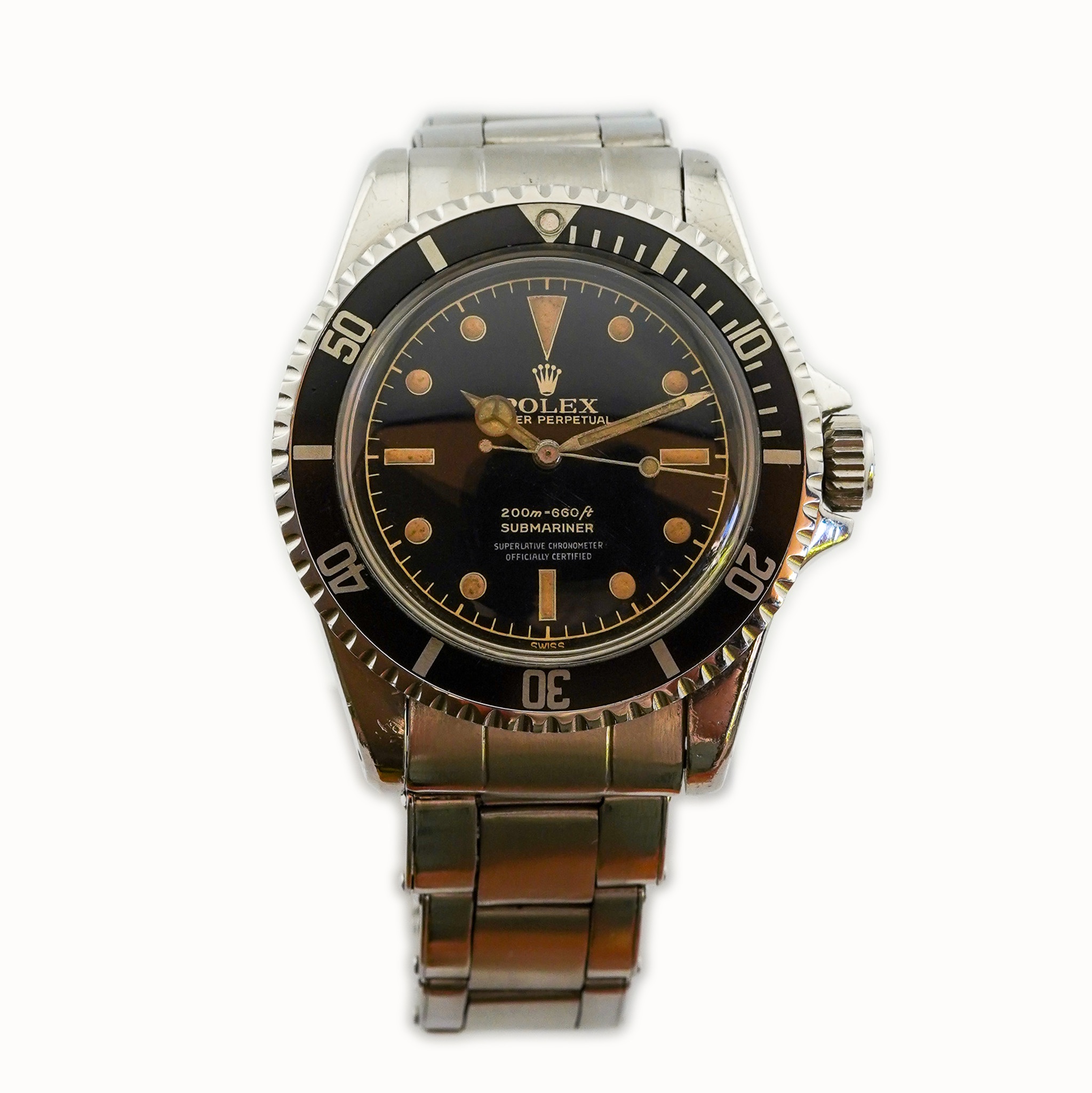
In 1962 the same case, the same bezel, the same bracelet, and the same hands went into two references. The only thing separating them on the wrist was a sentence. That sentence cost about thirty percent more.
Walk into a Rolex retailer in 1963 and you could buy a Submariner twice. The reference 5512 and the reference 5513 sat next to each other in the same tray, 40mm of Oyster steel apiece, rated to 200 meters, black bezel, riveted bracelet, no date. Hold them at arm’s length and there is no difference at all. Hold them at reading distance and one of them has two extra lines of text under the depth rating: SUPERLATIVE CHRONOMETER, OFFICIALLY CERTIFIED.
That was the entire visible argument for the price gap, and by the accounting collectors have pieced together from period documentation, the gap ran roughly fifty dollars, or about thirty percent over the 5513. Fifty dollars in 1963 is not a rounding error. It was real money attached to something the buyer could not see, could not test in the store, and would probably never notice on the wrist.
This is the story of the four-liner 5512, and it is more interesting than “rare dial variant commands premium.”
Nearly every listing and forum post you will read describes the 5512 as COSC certified. It is worth being precise here, because the timeline does not allow it.
The Contrôle Officiel Suisse des Chronomètres was founded on 13 September 1973, at the Château de Neuchâtel, as an association bringing the five watchmaking cantons under one standard. The 5512 entered production in 1959 and its chronometer-grade movements arrived around 1962. For the overwhelming majority of the reference’s life, COSC simply did not exist.
What existed instead were the Bureaux Officiels de Contrôle de la Marche des Montres, regional testing offices established between 1877 and 1956, each operating independently with its own criteria. Between 1961 and 1973 the working definition of a chronometer was a watch regulated in several positions and at different temperatures that had received a certificate from one of these bureaus, with a mean daily rate across five positions of minus one to plus ten seconds. Certificates were commonly issued collectively, covering batches rather than individual watches, which is part of why the surviving paperwork on watches from this era is so inconsistent.
So when your 5512 dial says OFFICIALLY CERTIFIED, it is not referencing the institution people assume. It is referencing a fragmented, canton-by-canton system that Switzerland eventually replaced precisely because it was too inconsistent to defend. COSC tightened the standard to minus four to plus six and moved to individual movement certification in 1973. The 5512 was discontinued around 1978. It lived almost its entire life under the old regime.
The Submariner did not start out as a chronometer. It started out as a tool, priced and positioned like one, and Rolex generally did not spend money submitting tool watch movements for certification. When it did, it charged for it. The Big Crown reference 6538 already had chronometer four-liners in the 1950s reading OFFICIALLY CERTIFIED CHRONOMETER, and those are genuinely rare, with the market seeing something in the range of ten to twenty non-chronometer 6538s for every certified one.
What the 5512 changed was the ratio. Chronometer certification stopped being an expensive special order and became the standard configuration of an entire reference, and Rolex built a second reference underneath it to hold the old price point. That is the first time the Submariner line was formally tiered, and it is the framework Rolex has used ever since.
The dial text itself is a Rolex invention layered on top of the official language. Rolex introduced the 1500 series calibers in 1957 with gold Microstella screws on the balance, and the rate results came in better than what the bureaus required for a mention. Rolex coined SUPERLATIVE CHRONOMETER for that margin and combined it with the existing OFFICIALLY CERTIFIED CHRONOMETER wording. It first appeared on Datejust and Day-Date dials in the late 1950s. The earliest certified 5512s still carried the older OCC-only text and are extremely scarce. The four-liner as collectors know it is where that wording lands on a Submariner and stays.
Here is where the extra fifty dollars actually went, because the tier was mechanical, not just administrative.
The 5512 ran the caliber 1560 and then, from around 1965, the 1570. Both are free-sprung, with a Breguet overcoil hairspring and Microstella regulating screws on the balance, and KIF shock protection. The 5513 ran the 1530 and then, from 1963, the 1520. The 1520 traded the Breguet overcoil for a flat hairspring, traded Microstella for a conventional index regulator, and used a screwless balance with two inertia blocks. It was deliberately cost-engineered, and it is one of the few moments where Rolex moved backward on purpose.
There is a wrinkle that almost nobody mentions. The 1520 beats at 19,800 vph. The 1560 beats at 18,000. For a window in the mid-1960s, before the 1570 arrived and brought the chronometer line up to 19,800, the cheaper non-certified 5513 was running the faster movement. The certified watch was the better-regulated one, not the more modern one.
The 5512 ran roughly two decades and changed constantly, so “4-liner 5512” describes a range of watches rather than one watch. What matters when you are looking at one:
Crown guards. The 5512 was the first Submariner with them. Square guards came first and are counted in the low hundreds, then the pointed or eagle beak style through the early 1960s in even smaller numbers, then the rounded profile that carried through to the end of production and into every modern Submariner.
Two-liner or four-liner. The earliest 5512s ran the non-chronometer 1530 and wore two lines. All of them are glossy gilt, and they are rare.
Gilt to matte. Glossy gilt dials with gold printing gave way to matte black with white printing around 1967.
Meters first or feet first. Early dials read 200m=660ft. Rolex reversed it to 660ft=200m around 1969 to 1970. Meters first is the earlier and more sought after configuration, and no early glossy gilt dial should read feet first.
Text order. SUBMARINER sat below the depth rating until the mid-1970s, when Rolex moved it above. Service replacement dials frequently follow the later convention, which is a useful tell.
Production volume. Roughly 17,338 examples of the 5512 against roughly 151,449 of the 5513. About one to ten.
The 5512 was gone by around 1978, absorbed by the date-equipped 1680 and outlived by the 5513 for another decade. The two-tier Submariner disappeared.
Then in 2015 Rolex redefined Superlative Chronometer as its own in-house standard, minus two to plus two seconds per day, applied to every watch after casing. The premium tier became the only tier. The upgrade a buyer paid thirty percent for in 1963 is now the floor, and the words on the dial mean something entirely different than they did when they were first printed on a Submariner.
Which is the actual reason a four-liner is worth looking at closely. It is not that the dial has more text on it. It is that the text is a receipt from a system that no longer exists, for a decision a specific person made at a counter in the 1960s, to pay more for accuracy they had no way to verify.
Continue reading
Now live: a Bulgari Octo Finissimo Tadao Ando Limited Edition, ref. 103245, in sandblasted titanium. Created with the celebrated Japanese architect an...
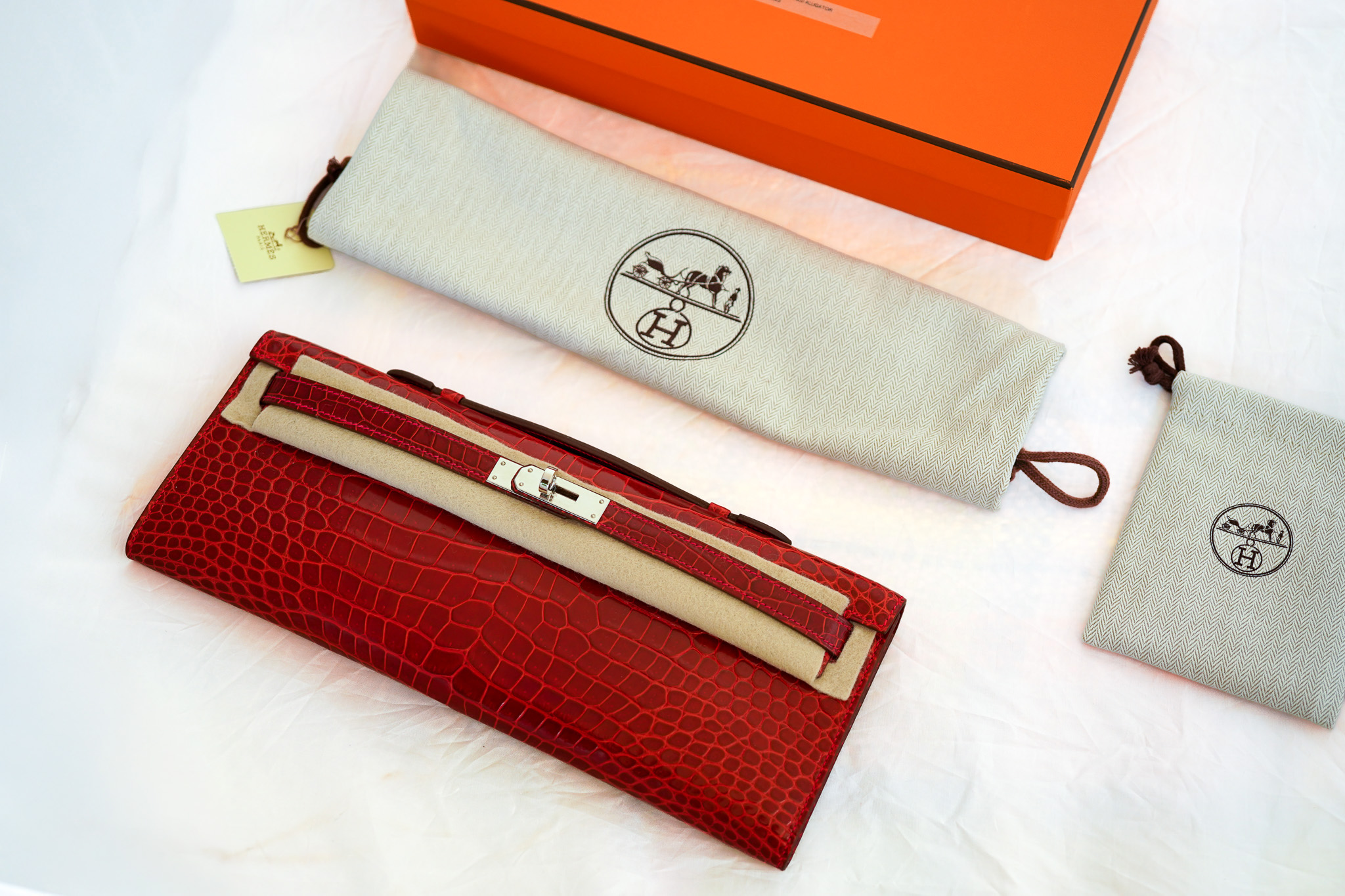
Now live: a 2023 Hermès Kelly Cut in shiny Rose Sheherazade alligator with palladium hardware, unworn and complete with its box, dust bags and tag. Th...
In 1962 the same case, the same bezel, the same bracelet, and the same hands went into two references. The only thing separating them on the wrist was...