
Now Live: Bulgari Octo Finissimo Tadao Ando Limited Edition, Ref. 103245, Sandblasted Titanium
Now live: a Bulgari Octo Finissimo Tadao Ando Limited Edition, ref. 103245, in sandblasted titanium. Created with the celebrated Japanese architect an...

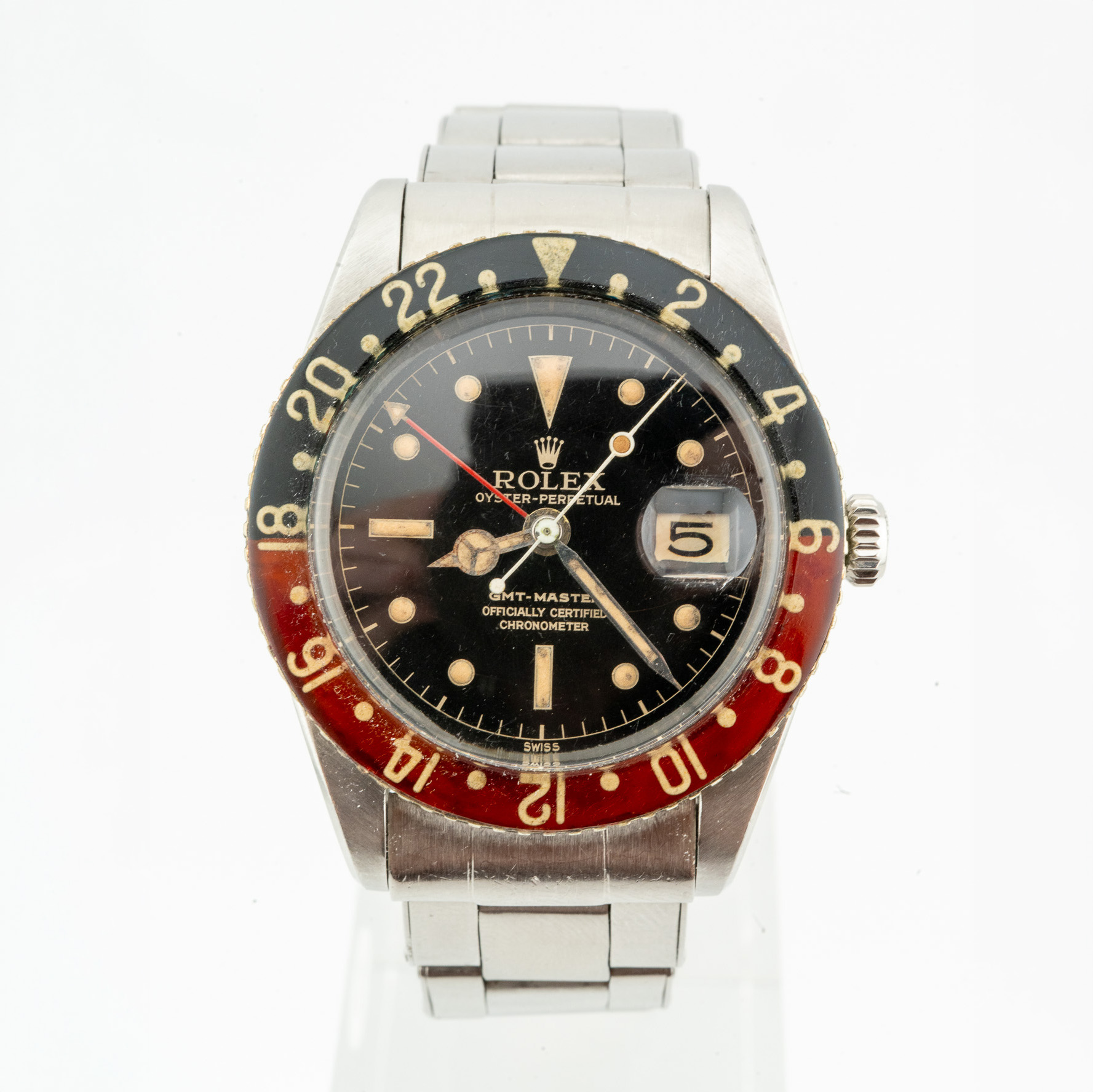
The GMT-Master 6542 is the most mythologized reference Rolex ever made, and almost every part of the myth is slightly wrong. The material is probably not Bakelite. The glowing numerals were probably not radium. And the recall everyone cites happened after the watch was already discontinued.
Start with the name, because the name tells you what kind of object this is.
Collectors call the 6542 the “Pussy Galore,” after Honor Blackman’s character in Goldfinger. Blackman wears a GMT-Master on screen, and the association stuck hard enough that an entire reference now carries a Bond henchwoman’s name. But Goldfinger was released in 1964. The 6542 was discontinued around 1959 and replaced by the 1675 at that year’s Basel Fair. The watch on Blackman’s wrist was already five years out of production when the cameras rolled, and the nickname was applied by collectors long after that.
That gap is the tell. Nearly everything the market believes about this watch was assembled backward, decades later, from fragments. Including the part about the radiation.
The standard version goes like this. Rolex built the first GMT-Master for Pan Am in 1954 or 1955, gave it a translucent Bakelite bezel with luminous numerals filled with radium, and then discovered the radium was dangerously radioactive. The US Atomic Energy Commission intervened, Rolex recalled the watches, swapped the bezels for aluminum, and that is why surviving Bakelite inserts are so scarce and so expensive.
Most of that is repeated in nearly every listing you will read. Some of it is right. The parts that are wrong are wrong in ways that matter if you are buying one.
The watch historian James Dowling has published the paper trail, and the paper trail does not describe a radium problem.
For a short window in the late 1950s, Swiss dial and bezel makers used Strontium-90 as a substitute for radium. Sr-90 is a fission byproduct, produced in reactors and in nuclear weapons. It was thought at the time to be the safer option, because unlike radium it emits no gamma radiation and no radon. The industry was not being reckless by the standards of the day. It was, on the available information, being cautious.
The supply is documented in an unlikely place. On 29 March 1962 the House of Lords debated a New York Times report that Swiss dial painters had been taking home pots of Strontium-90 for evening piecework. Viscount Hailsham, then Lord President of the Council and Minister for Science, confirmed that the UK Atomic Energy Authority had supplied Strontium-90 to a firm in Switzerland which was understood to have used it for luminising watches, that supplies to that firm were discontinued, and that from the beginning of 1958 Sr-90 went to Switzerland for medical and research purposes only. He added that the material may reasonably have been thought safer than radium at the time.
So the glowing numerals on some 6542 bezels are British nuclear byproduct, sold commercially, and the window in which it could have been supplied is narrow. Britain’s first fusion reactor at Calder Hall opened in October 1956 and its first thermonuclear test was in May 1957, with supply cut off at the start of 1958. Dowling estimates that Sr-90 could have been in use for roughly twelve months of the 6542’s sixty-month production run, which puts a ceiling of about twenty percent on how much of the production could carry it.
Then scientists worked out that Sr-90 behaves like calcium in the body and concentrates in bone and marrow. The US Atomic Energy Commission issued notice to fifteen Swiss watch firms at the end of 1959 requiring recall of watches containing it. Note the date. That is roughly eight months after Rolex had already stopped making the 6542, and it was an industry-wide action, not a Rolex-specific one. Rolex did publish notices offering free bezel replacement, and the commonly cited figure is around 605 watches in North America, though that number gets repeated far more often than it gets sourced.
There is also a quieter fact worth holding onto. Rolex had already moved to metal bezel inserts during production, and the reason was fragility, not radiation. The plastic cracked. The brass bezel underneath it cracked too. The material was replaced because it was failing in service, and the atomic story arrived afterward.
This is the practical consequence, and it is the part almost no listing gets right.
Dowling documents two 6542s with complete paperwork that were tested by authorities and came back clean. One belonged to a Royal Canadian Air Force pilot whose watch was recalled by internal memo for radiological testing in 1960, and returned with a letter from Rolex Canada confirming no radiation was found. If Sr-90 was in use for only about a year of a five-year run, most surviving bezels should test as ordinary period radium, which is a very different and much better understood exposure profile.
So “the radioactive bezel” is not a property of the reference. It is a property of a subset, and it is testable. If you are buying a 6542 with an intact plastic insert, this is a question with an actual answer rather than a piece of folklore to price in.
Radium on the dial and hands is a separate matter and is present across the era regardless. Handle any pre-tritium watch sensibly, do not open cases casually, and do not let anyone tell you a Geiger counter reading is a certificate of authenticity. It is a reading, nothing more.
Bakelite is phenol formaldehyde, patented by Leo Baekeland in 1907, and its defining characteristic as a material is that it is opaque. It cannot be made transparent. The whole visual appeal of a 6542 insert is that it is translucent, with the numerals appearing to float inside the material at depth.
Which means the thing collectors call Bakelite is almost certainly something else. Sources variously describe it as a cast phenolic, an acrylic, or an unspecified early plastic, and they contradict each other freely, including one widely read article that states flatly that Bakelite is an acrylic, which is chemically false. Nobody has published a materials analysis that settles it.
The honest position is that “Bakelite bezel” is a trade nickname of unknown accuracy that the market has fully adopted. Use it, because everyone does, but do not repeat the chemistry as though it were established.
Reference basics. First GMT-Master, developed alongside Pan Am for transatlantic jet operations, 38mm, no crown guards, acrylic crystal, bidirectional 24-hour bezel paired with a fourth hand. Rolex registered the model in April 1955, though it was shown at Basel the previous spring.
Movement. Caliber 1036 in early production, then 1065, then 1066, derived from the 1030 that ran the Turn-O-Graph. The 24-hour hand is linked to the hour hand and cannot be set independently, so offsets are made by turning the bezel. Independent hour hand setting does not arrive until the GMT-Master II.
Bezel. Translucent red and blue on steel examples, brown on the gold ones, then anodized aluminum from around 1956. Aluminum inserts are correct on later production and are not a red flag by themselves.
Cracks. Most surviving plastic inserts are cracked or chipped, sometimes in ways that are hard to see without raking light. A cracked insert has been valued at a small fraction of an intact one, so this single detail can move the number more than anything else on the watch.
Fakes and fills. Reproduction inserts are common and improving. Numeral shape is the usual tell, and any insert that glows convincingly bright is more likely to be a later replacement or a refill than original material.
Lume era. Radium early, then the Sr-90 window, then tritium. Service bezels exist that are period plastic with tritium fill, which are original-looking, non-hazardous, and not original.
The watch was built for pilots in 1954. The bezel was changed because it broke. The radiation notice came at the end of 1959, after the reference was dead. Goldfinger was released in 1964. The nickname came later still, and the six-figure prices came later than that.
Every layer of meaning on this watch was added after the fact, by people who were not there, working from incomplete records. That is not a criticism of the reference. It is the most honest thing you can say about vintage collecting generally, and the 6542 just happens to be the clearest example of it anyone has ever produced.
Continue reading
Now live: a Bulgari Octo Finissimo Tadao Ando Limited Edition, ref. 103245, in sandblasted titanium. Created with the celebrated Japanese architect an...
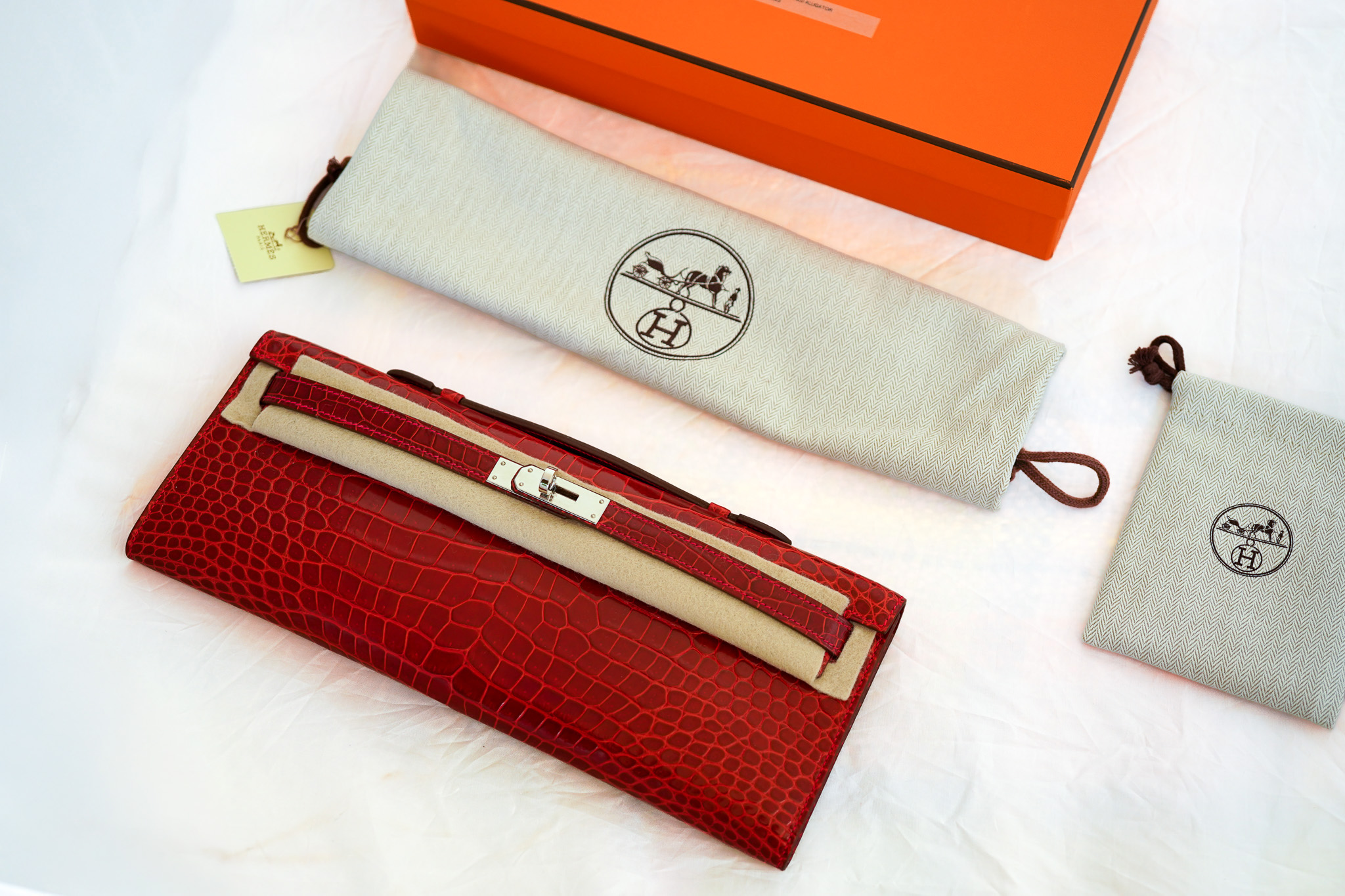
Now live: a 2023 Hermès Kelly Cut in shiny Rose Sheherazade alligator with palladium hardware, unworn and complete with its box, dust bags and tag. Th...
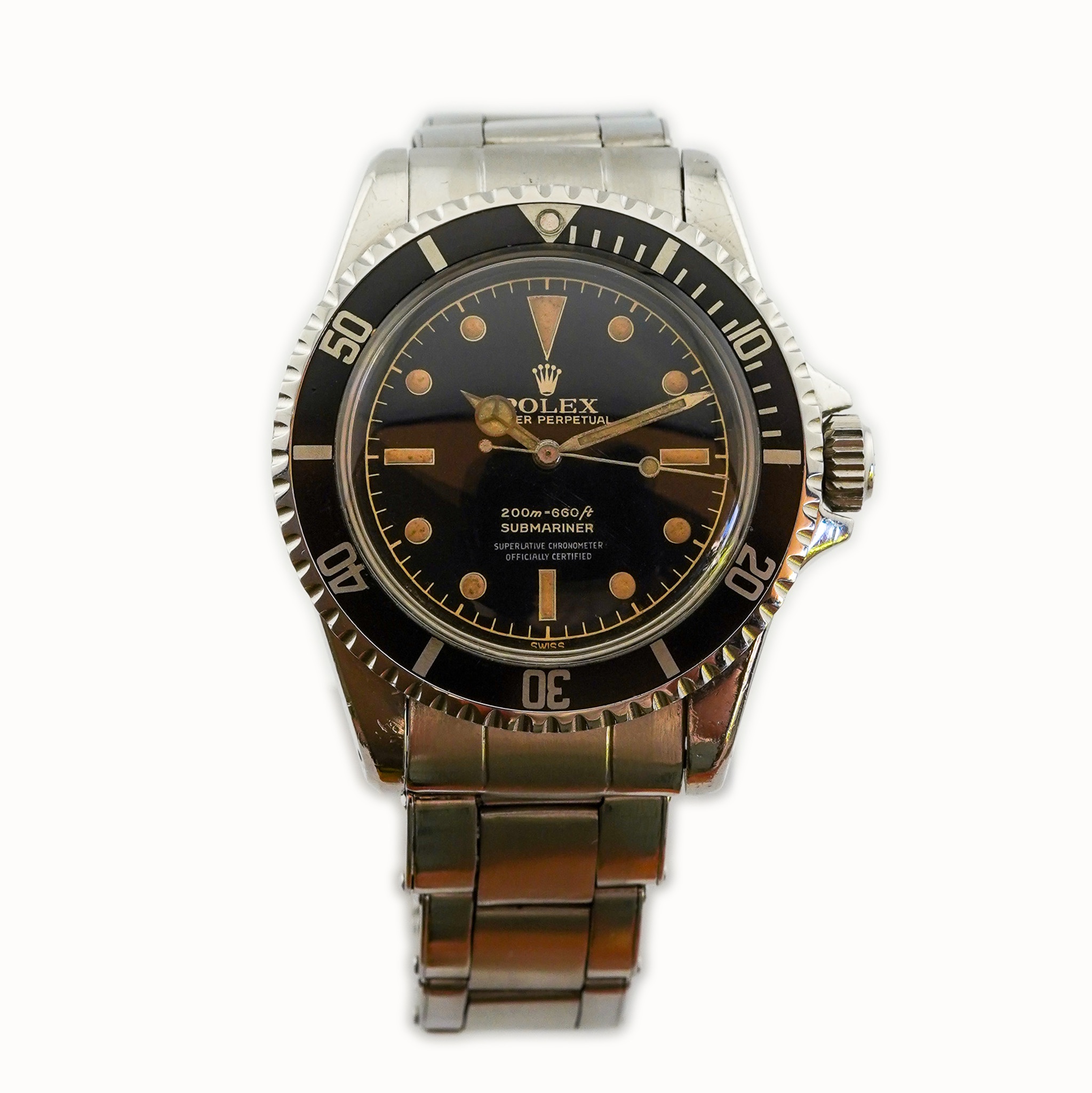
In 1962 the same case, the same bezel, the same bracelet, and the same hands went into two references. The only thing separating them on the wrist was...